
Kosher Wine: Everything You Need to Know, from Its Origins to Tasting


Kosher wine, sometimes referred to simply as kosher-certified wine, is as fascinating as it is often misunderstood. Does it have to be produced in Israel? Is it blessed by a rabbi? Why do some bottles carry the word mevushal? Does kosher wine taste different? And what rules must a winery follow in order to sell a wine as kosher?
Behind this designation lies a history spanning thousands of years, along with a very precise set of rules.
Wine has played an important role in Jewish tradition for centuries. It accompanies Shabbat, religious holidays, weddings and many other celebrations. This spiritual significance also explains why its production and handling are subject to stricter rules than those applied to many other foods and beverages.
Yet contrary to a widespread misconception, kosher wine is neither a particular style of wine nor a specific grape variety, and it does not necessarily come from Israel.
A great kosher wine is, first and foremost, a great wine: its terroir, grapes, vintage, ageing and the winemaker’s expertise remain essential.
What makes it different is the way it is produced, supervised and handled.
What Are the Origins of Kosher Wine?
To understand the origins of kosher wine, we need to go back far beyond the development of modern kosher certification.
Wine has been part of Jewish culture and tradition since Antiquity. In biblical and rabbinic texts, it has agricultural, festive and spiritual significance.
Wine was notably used in the service of the Temple in Jerusalem, where wine libations accompanied certain sacrifices. Even today, it continues to play an important role in a number of Jewish rituals and celebrations.
Wine and Kiddush
One of the best-known examples is Kiddush.
At the beginning of Shabbat and certain Jewish holidays, a blessing of sanctification is traditionally recited over a cup of wine or, in some circumstances, grape juice.
The Torah commands Jews to remember the Sabbath day and sanctify it. Jewish sages established that this sanctification should notably be performed over a cup of wine. Wine has therefore held an important ceremonial role in Jewish life for centuries.
Wine is also used during Havdalah, which marks the end of Shabbat, as well as at weddings and other religious occasions.
During Passover, its role becomes particularly visible, as the four cups of wine traditionally form part of the Passover Seder.
Why Is Wine Subject to Special Rules?
Its sacred role, however, explains only part of the story.
In Antiquity, wine was also commonly used in pagan rituals and libations.
Jewish religious law therefore gradually developed strict rules concerning certain wines produced or handled outside the framework established by Jewish law. Rabbinic texts distinguish, among other things, between wine that had been used for idolatrous libations and other categories of wine whose consumption was prohibited by rabbinic decree.
Beyond the question of idolatry, rabbinic sources also refer to a desire to limit certain forms of social intimacy that could develop through the shared consumption of wine.
It is within this historical and religious context that we should understand the modern rules governing kosher wine.
The certification system we know today with inspections, certification bodies, logos and traceability procedures is modern in its form, but the religious principles behind it are ancient.
What Does “Kosher” Actually Mean?
The word kosher means that a food or beverage complies with Jewish dietary laws, known collectively as kashrut.
When it comes to wine, these rules concern not only certain ingredients but also winery equipment, the different stages of winemaking, supervision of the production process and the people authorised to handle the product at certain stages.
One essential principle should be remembered: A wine does not become kosher because it has been blessed.
This is probably one of the most widespread misconceptions about kosher wine.
Does a Rabbi Have to Bless Kosher Wine?
No.
There is no special blessing that magically transforms an ordinary bottle of wine into kosher wine.
The role of the rabbinic authority or kosher certification organisation is to ensure that the various rules of kashrut have been respected throughout production.
In a winery, this supervision may concern ingredients, tanks, pumps, hoses, barrels, transfers, filtration and bottling.
The mashgiach, the person responsible for supervising compliance with kashrut, therefore plays an important role in the process.
How Is Kosher Wine Made?
From a purely oenological perspective, the main production stages are similar to those used for any other wine.
The grapes are harvested, pressed or crushed, and the must is fermented. The wine may then be aged in tanks, amphorae or barrels, blended, filtered, stabilised and finally bottled.
The main difference lies in the way these operations are supervised and controlled.
Production must comply with the requirements of the authority responsible for granting the kosher certification.
This requires particularly rigorous organisation within the winery and accurate traceability throughout the process.
Do the Grapes Themselves Have to Be Kosher?
There is no special variety of kosher grape.
In other words, there is no such thing as a “kosher grape” or a “kosher grape variety”.
Cabernet Sauvignon, Merlot, Syrah, Pinot Noir, Grenache, Chardonnay, Sauvignon Blanc, Chenin Blanc, Riesling and many other grape varieties can all be used to produce kosher wine.
Kashrut does not define the flavour profile of a wine. It governs the way the wine is produced.
This is why kosher wines are now available in virtually every style: powerful reds, elegant reds, dry whites, rosés, sparkling wines, sweet wines and age-worthy fine wines.
At What Stage Do the Rules Become Particularly Strict?
Whole grapes do not yet have the same status as grape juice intended to become wine.
From the key stages during which grapes are transformed into grape juice or must intended for winemaking, specific rules concerning handling come into effect.
Under many Orthodox kosher certifications, operations involving the wine directly must be carried out by individuals who meet the religious criteria established by the certification authority.
Producing kosher wine can therefore require very specific organisation during harvest.
It is not necessarily enough for a supervisor simply to observe the work from a distance. Certain operations may have to be carried out directly, or controlled according to procedures established by the kosher certification authority.
Does Winery Equipment Also Have to Be Kosher?
Yes, and this is an essential point.
When a winery that normally produces conventional wines wishes to make a kosher cuvée, it must ensure that all equipment coming into contact with the product meets the necessary requirements.
This may include tanks, presses, pumps, hoses, filters and containers.
Depending on how they were previously used, certain pieces of equipment may require a specific preparation process known as kashering.
Barrels also require particular attention.
This helps explain why producing a kosher cuvée in a winery that does not normally make kosher wines requires meticulous preparation.
Do Winemaking Ingredients and Processing Aids Also Have to Be Checked?
Yes.
During the winemaking process, wine does not necessarily involve fermented grape juice alone.
A winemaker may use selected yeasts, yeast nutrients, enzymes, fining agents, stabilisers or other oenological processing aids.
When producing kosher wine, the products concerned must be approved for use under the applicable kosher certification.
This verification is important because certain processing aids may contain substances, or may have been produced using substances, that are incompatible with the religious requirements being followed.
Kosher control therefore applies to the entire production process, not simply to the grapes.
Does Kosher Wine Have to Be Produced in Israel?
No.
This is another extremely common misconception.
Kosher wine can be made in Israel, but also in France, Switzerland, Italy, Spain, the United States, Argentina, South Africa or any other wine-producing region capable of meeting the requirements imposed by the chosen kosher certification.
Israeli and kosher are not synonymous.
A wine produced in Israel is not automatically kosher.
Conversely, a wine produced by a French, Swiss or Italian winery can perfectly well obtain kosher certification.
Are Israeli Wines Subject to Additional Rules?
Wines made from grapes grown in the Land of Israel may be subject to additional religious agricultural laws.
These include, among others, the laws of Orlah, which concern the first years of production of a vineyard, certain requirements regarding agricultural tithes and the rules surrounding Shemittah, the agricultural sabbatical year.
These concepts are separate from many of the issues encountered in European vineyards.
This explains why the kosher certification of an Israeli wine can involve additional agricultural considerations.
What Is Mevushal Wine?
It is impossible to discuss kosher wine in depth without explaining the term mevushal.
In Hebrew, mevushal literally means “cooked”.
The religious principle is ancient: when wine has been heated in a manner that meets the applicable halachic requirements, its status regarding certain types of handling changes.
In modern wineries, this may be achieved through very rapid thermal processes rather than prolonged “cooking” in the everyday sense of the word.
This distinction is particularly important in the restaurant and hospitality industries.
Why Is Mevushal Wine Produced?
Imagine a hotel, wedding or reception attended by guests who strictly observe the laws of kashrut.
Several waiters, sommeliers or other members of staff may need to touch the bottles or pour the wine.
With a kosher non-mevushal wine, certain forms of handling after opening may become problematic if the person handling the wine does not meet the relevant religious requirements.
Mevushal status makes this situation considerably easier to manage.
Historically, the principle is based on the fact that “cooked” wine was no longer considered suitable for the ritual libations that had originally contributed to these restrictions.
Mevushal wine is therefore particularly common in restaurants, hotels and the events industry.
Is Non-Mevushal Wine Less Kosher?
Absolutely not.
This is a fundamental point.
Mevushal does not mean “more kosher”.
A certified kosher wine that is non-mevushal can be completely compliant with the laws of kashrut.
The distinction mainly concerns the rules that apply to its handling.
In other words, both are kosher wines, but the conditions under which they may be served can differ.
At What Temperature Is Mevushal Wine Heated?
The answer is more complicated than it may initially seem.
There is no single universal temperature accepted in exactly the same way by all rabbinic authorities.
The criteria determining whether a wine is considered mevushal may vary according to the halachic authority and kosher certification organisation involved.
Consumers should therefore not try to determine for themselves whether a particular pasteurisation process was sufficient.
Instead, they should rely on the kosher certification and the information provided on the bottle.
Does Heating Affect the Taste of Wine?
Older heating techniques could have a relatively significant impact on the aromatic finesse of a wine.
Modern technologies, however, allow for much shorter and more precisely controlled thermal treatments.
A mevushal wine should therefore never automatically be associated with poor quality.
As with any wine, final quality depends on the grapes, terroir, vintage, winemaking process, ageing and the skill of the producer.
Technological advances have enabled many wineries to produce mevushal wines whose quality is far removed from the stereotypes historically associated with this category.
Is Kosher Wine Always Sweet?
No.
This misconception is partly rooted in the commercial history of certain popular kosher wines during the 20th century, many of which were indeed produced in sweet or very sweet styles.
That generalisation is now completely outdated.
Today’s kosher wine market includes mineral dry whites, gastronomic rosés, elegant reds, powerful wines, sparkling wines, single-vineyard cuvées and age-worthy fine wines.
Kosher certification does not determine the sugar level of a wine.
Does Kosher Wine Taste Different?
Not necessarily.
In a blind tasting, it would generally be impossible to identify a wine as kosher solely from its flavour.
Its character depends primarily on its origin, grape variety, grape ripeness, climate, soils, yields, fermentation, extraction, ageing and the style sought by the winemaker.
Kosher status is primarily related to the conditions under which the wine is produced and handled, rather than to any predetermined flavour profile.
What Is the Difference Between Kosher Wine and Kosher-for-Passover Wine?
This distinction is essential.
A wine may be kosher throughout the year without necessarily being certified for Passover.
During Passover, additional rules apply, particularly with regard to products that may be connected to chametz, a term referring to certain fermented grain products prohibited during the holiday.
In a winery, this can have implications for certain yeasts, processing aids, equipment or containers that may previously have been used for other products.
When wine is intended to be consumed during Passover by people who observe these requirements, it is therefore important to look specifically for appropriate Passover certification.
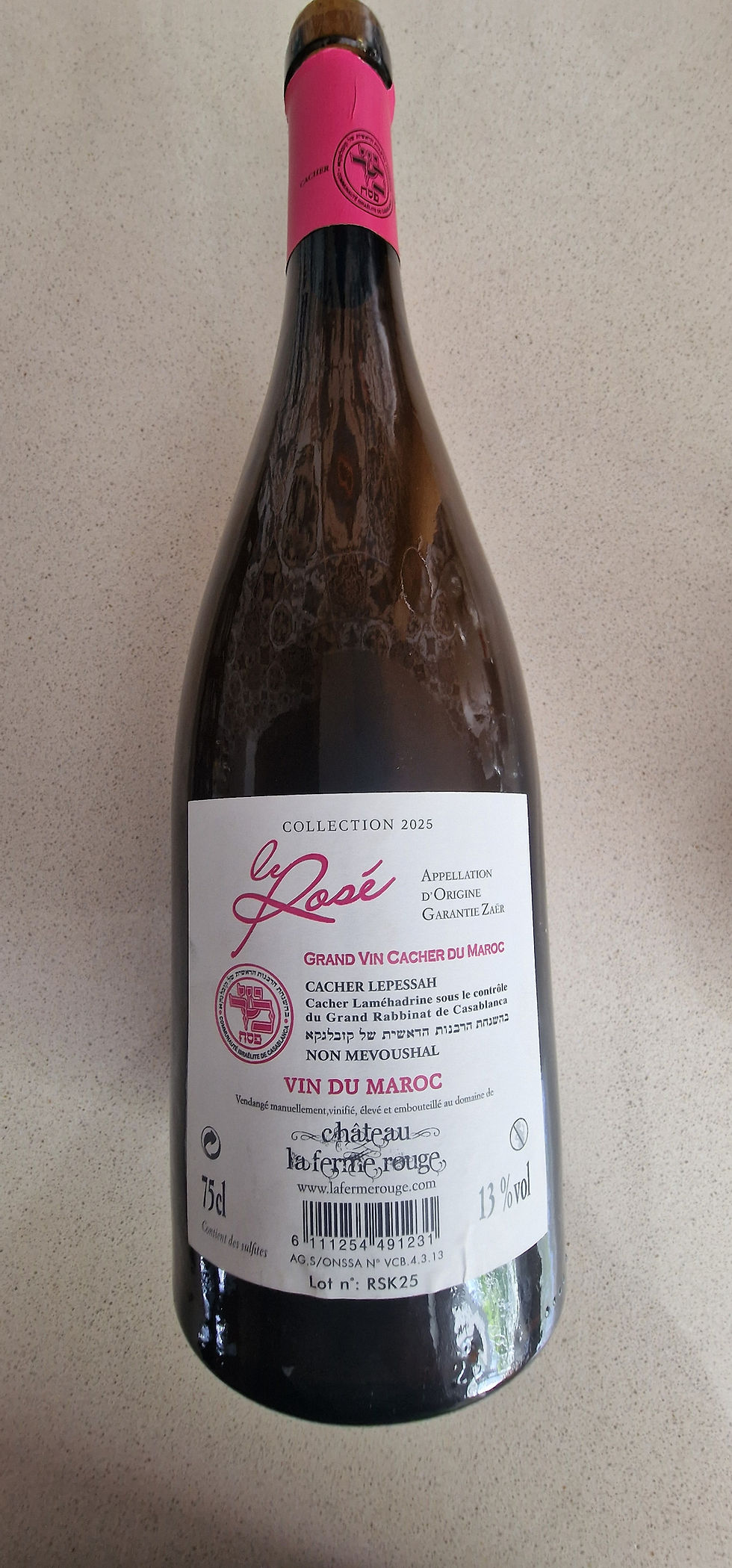
How Can You Recognise a Kosher Wine?
The first thing to look for is a hechsher, the certification mark of a recognised rabbinic authority or kosher certification organisation.
This symbol is generally found on the front or back label of the bottle.
Depending on the wine, you may also find terms such as “Kosher”, “Kosher for Passover”, “Mevushal” or their Hebrew equivalents.
However, not all Jewish communities necessarily follow the same certification organisations or recognise the same standards.
When organising an event for guests who strictly observe kashrut, it is therefore advisable to ask which certification is required or accepted.
Does Kosher Mean Organic, Vegan or Natural?
No.
These terms refer to different standards and production philosophies.
A wine may be both kosher and organic, but kosher certification does not automatically mean that it has been organically produced.
Likewise, a kosher wine may be vegan, but the fining and clarification methods used must be checked separately.
Kosher also does not automatically mean biodynamic, natural wine or wine without added sulphites.
It is therefore entirely possible for a wine to combine several certifications or production philosophies, but each one must be considered independently.
How Do You Choose a Good Kosher Wine?
Once the certification requirements have been checked, choosing a kosher wine follows the same principles as choosing any other good bottle of wine.
Consider the appellation, winery, terroir, vintage, grape variety, winemaking style and, of course, the food that will accompany it.
For an aperitif, a fresh white wine, dry rosé or sparkling wine can be an excellent choice.
With fish or delicate cuisine, a white wine offering plenty of freshness can work beautifully.
With red meat or slow-cooked dishes, Cabernet Sauvignon, Syrah, Merlot or more structured blends can make excellent pairings.
For a wedding, corporate dinner or reception involving service staff, however, one additional question becomes essential: Does the wine need to be mevushal?
Ideally, this should be established before purchasing the wine.
Why Is Kosher Wine Experiencing a True Revival Today?
For many years, perceptions of kosher wine were dominated by a relatively limited number of products intended primarily for religious use.
The wine landscape has changed considerably.
Today, many wineries are working to produce kosher wines capable of competing with the finest conventional wines from their respective regions.
Consumers are also increasingly interested in terroir, grape varieties, ageing techniques and cellaring potential.
Contemporary kosher wine therefore fully belongs to the worlds of gastronomy and fine wine.
Its certification represents an additional requirement, but it should not overshadow what matters most: a bottle of wine should above all provide pleasure and emotion when tasted.
The Most Common Misconceptions About Kosher Wine
One of the most common misconceptions is that a rabbi must “bless” every bottle. This is false: kosher certification is based on compliance with a set of production and supervision rules.
Another common mistake is assuming that all kosher wines come from Israel. Again, this is incorrect. Kosher wines can be produced in many different countries.
Kosher wine is not necessarily sweet, and mevushal wine is not necessarily of inferior quality.
Finally, kosher, mevushal and kosher for Passover are not interchangeable terms. Each provides different information to the consumer.
Kosher Wine, Mevushal and Passover: What You Need to Remember
The term kosher wine refers to wine produced in accordance with the laws of kashrut and under appropriate supervision.
The term mevushal indicates that the wine has undergone a heat treatment recognised by the relevant certification authority, changing certain rules concerning its handling.
The designation kosher for Passover means that the product also satisfies the specific requirements of the Passover holiday.
The same bottle can therefore be kosher, mevushal and kosher for Passover at the same time.
However, these terms do not mean the same thing.
FAQ: Frequently Asked Questions About Kosher Wine
What Is Kosher Wine?
Kosher wine is wine produced in accordance with the Jewish dietary laws of kashrut and under appropriate supervision to ensure that these rules are respected.
What Are the Origins of Kosher Wine?
The rules surrounding wine have their roots in Antiquity and Jewish religious law. Wine occupies a special place in Jewish rituals, while historically it was also used in pagan worship. This contributed to the development of specific rules governing its production and handling.
Is Kosher Wine Blessed by a Rabbi?
No. Kosher status comes from compliance with production and supervision requirements, not from a blessing performed over the bottle.
Does Kosher Wine Have to Come from Israel?
No. It can be produced in Switzerland, France, Italy, Spain, the United States or any other wine-producing region capable of complying with the kosher certification process.
Are All Israeli Wines Kosher?
No. Israeli origin and kosher certification are two separate concepts.
What Does “Kosher” Mean?
The word “kosher” means that a product complies with the Jewish dietary laws known as kashrut.
What Is Mevushal Wine?
Mevushal wine is kosher wine that has undergone a heat treatment recognised by the relevant rabbinic authority. This status notably makes it easier for the wine to be handled and served by staff who may not meet the requirements applicable to a non-mevushal kosher wine.
Is Non-Mevushal Wine Really Kosher?
Yes. A non-mevushal wine with appropriate kosher certification is fully kosher. Different rules simply apply to its handling.
Is Kosher Wine Always Sweet?
No. Kosher wines are now available in virtually every style, from crisp dry whites to powerful, age-worthy red wines.
Is Kosher Wine Automatically Vegan?
No. Kashrut and vegan production follow two different sets of requirements.
Can Non-Jewish People Drink Kosher Wine?
Of course. Kosher wine can be enjoyed by anyone.
Can Kosher Wine Be Served in a Regular Restaurant?
Yes, but the rules surrounding its handling are important, particularly for non-mevushal wine. When organising an event for guests who strictly observe kashrut, it is advisable to confirm certification and service requirements beforehand.
Kosher Wine: Where Wine, History and Tradition Meet
Reducing kosher wine to a simple certification would mean overlooking much of what makes it so interesting.
Its history tells the story of an ancient relationship between wine and Jewish tradition. Its production illustrates the meeting point between centuries-old religious rules and the techniques of contemporary winemaking.
Yet when it comes to tasting, the pleasure of wine remains universal.
A kosher wine can express the minerality of a terroir, the power of Cabernet Sauvignon, the elegance of Pinot Noir, the freshness of Chardonnay or the finesse of a great sparkling wine.
Kosher does not describe a particular taste. It describes a way of producing and preserving wine in accordance with precise rules.
And behind every successful bottle are ultimately the same elements that fascinate wine lovers everywhere: the vine, the terroir, human craftsmanship, time and the pleasure of sharing.


Comments